
Available · Introductory internship · Summer 2027 · 1 to 2 months

Future engineer in power systems, energy and embedded systems.

I build complete systems, from the ESP32 sensor to the power-flow solver, and validate every result against a reference.

  • EHTPElectrical & Energy Eng.
  • 3public projects
  • 2 yrstraining others in C and IoT
ONE-LINE DIAGRAM · PORTFOLIO
B1 · SWINGBUS10−13 puB2 · NABD59 $B3 · TIPE23 %B4 · ARIADNE2,4 ×
Illustrative diagram. Each busbar opens a project.
  • C++
  • ESP32
  • Arduino core 3.x
  • Python
  • NumPy
  • SciPy
  • MATPOWER cases
  • ESP32-S3
  • GPS
  • ESP-IDF
  • KiCad
  • Function generator
  • Oscilloscope
  • RLC bench
  • FreeRTOS
  • PyTorch
  • PyTorch Geometric
  • XGBoost

From sensor to solver, I build the whole system. Then I verify every number against a reference.

IN NUMBERS

Figures you can check.

Each value comes from a repository or the defended TIPE. Open one to trace it to its source.

DATASHEETREF. EE-2027REV. NOVEMBER 2026
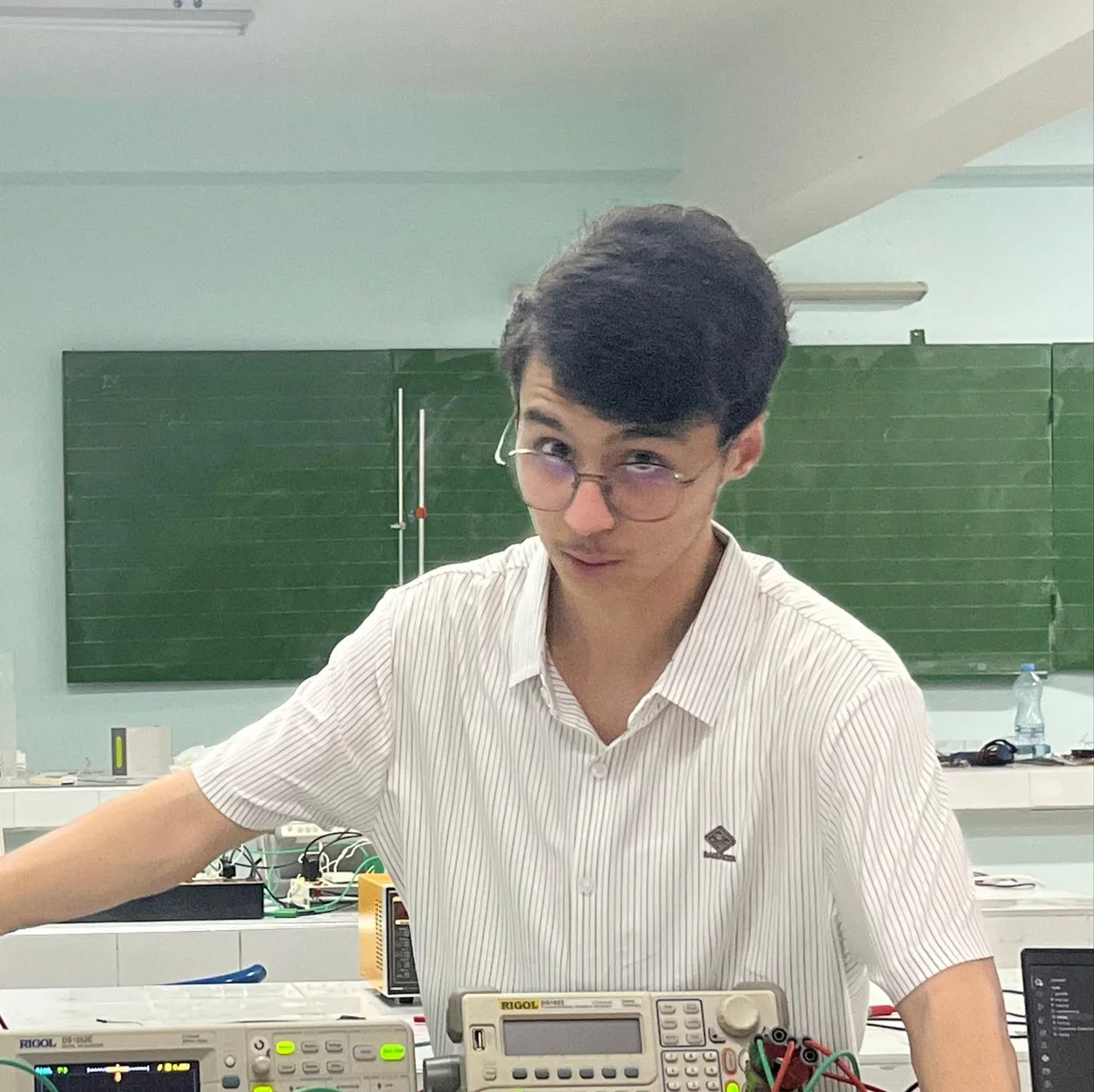
Elmehdi Essamit in the laboratory
In the laboratory, CPGE MP

IN 30 SECONDS

An intern who delivers a verified result.

Profile
Engineering student, year 1
School
EHTP · Electrical and Energy Engineering
Looking for
Introductory internship
Period
Summer 2027 · 1 to 2 months
Fields
Engineering studies · Operations · Maintenance · Automation
Mobility
Morocco or abroad
Languages
Arabic · French · English
Based in
Casablanca, Morocco

YOUR TEAM

What does your team do?

Pick the closest. You will see the related project, what I actually did on it, and a possible internship subject.

THE PROOF

swingbus

10−13pu

maximum deviation from PYPOWER

AC and DC power flow, N-1 contingencies, DC-OPF.

THE PROOF

nabd

59$

of hardware per measurement node

Frequency, ROCOF, synchrophasors, mains-isolated acquisition.

WHAT I BRING

A SUBJECT FOR YOU

Energy dashboard for a sitePython scripts + dashboard + note

THE PROOF

ariadne

2.4×

faster than stop-and-pivot

Pole placement, motion planning, C++ on FreeRTOS on ESP32.

THE PROOF

Wireless power transfer

23%

reported resonant peak, at 34 kHz

RLC bench, oscilloscope, efficiency, model versus measurement.

WHAT I BRING

A SUBJECT FOR YOU

Reactive power compensationCalculation tool + sizing note

01 / WHY ME

What a team gains by taking me on.

No vague promises: four qualities, each backed by work you can open and check.

  1. 01

    I verify before I claim.

    My grid solver is checked against PYPOWER on every commit: maximum deviation of 10⁻¹³ pu. My TIPE model matches the measurements with R² = 0.992. You can trust a number I hand you.

    Evidence: swingbus · TIPE
  2. 02

    From sensor to solver, on my own.

    KiCad board, ESP32 firmware, Python collection, analysis: I can follow a signal through the whole chain. On an internship, I quickly understand the system around the task I am given.

    Evidence: nabd
  3. 03

    I move without waiting.

    Three projects published on GitHub outside coursework, during preparatory classes and my first year. Tests, continuous integration, documentation: shipped, not just started.

    Evidence: ariadne · GitHub
  4. 04

    I work well with people.

    Two years training students in C and IoT, and now organizing industrial visits at the Electro-Power club. I explain clearly and fit into a team quickly.

    Evidence: BeurdByte · Electro-Power
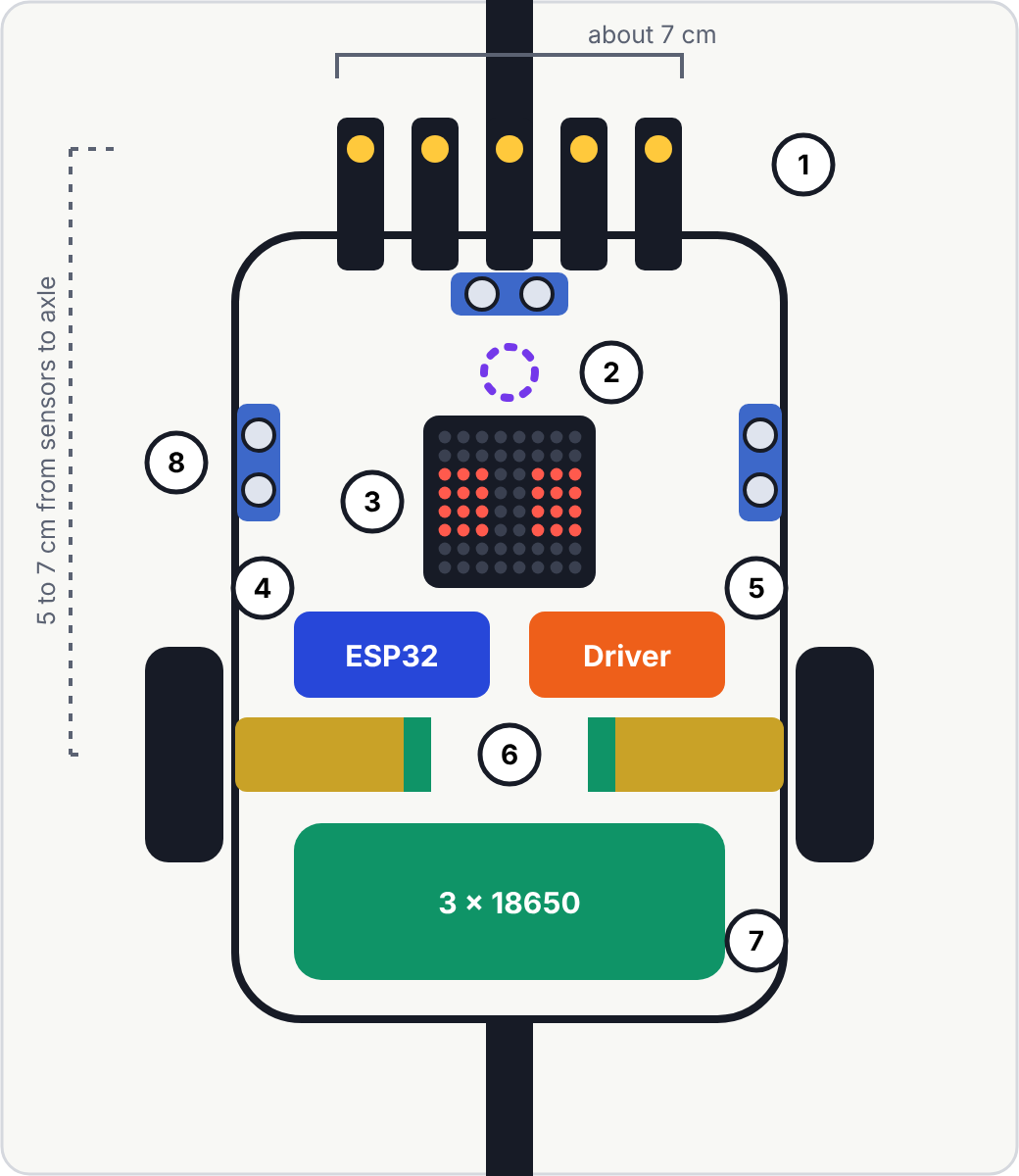
  1. 015 line sensorsTCRT5000 · see the tape
  2. 02Ball casterfront support
  3. 038 × 8 matrixMAX7219 · the face
  4. 04ESP32the brain and the Wi-Fi
  5. 05Motor driverL298N, TB6612FNG or DRV8833
  6. 062 N20 motorsencoders · 0.15 mm steps
  7. 073 × 186505 V buck, 3 A fuse
  8. 083 ultrasonic sensorsHC-SR04 · hear the walls

ZOUZOU · REAL-TIME 3D MODEL

Eight parts.
One robot.

Scroll to open it, drag to turn it. The model is drawn by a WebGL renderer written for this page, with no library.

Illustrative model, after the chassis plan in the manual.

Manual PDF
Top view of the chassis with its eight numbered parts

SWINGBUS · TRANSMISSION NETWORK ANALYSIS

A line trips. Does the grid hold?

  1. 01
    Solve

    Newton-Raphson finds the voltage at every bus and the flow on every line.

  2. 02
    Trip

    Each line is taken out in turn: the N-1 criterion. The flow shifts onto the others, and an overload is flagged.

  3. 03
    Check

    Results checked against PYPOWER on every commit, on MATPOWER cases.

Read the swingbus case study
OVERLOAD1 · SWING2345678MAX DEVIATION · PYPOWERIEEE 118-BUS · FULL N-110−13 pu8.3 ms

02 / PROJECTS

From problem to verified result.

Each project in two lines: the question asked, and the figure that answers it. The detail is in the case study.

FEATURED PROJECT · CLUB ELECTRO-POWER

ZouzouMaze-solving robot

An ESP32 robot that explores an unknown maze, proves which way out is shortest, drives home by itself, then races it. Built to be shown to children.

  • It draws a map
  • It proves the shortest way
  • Tape or walls
  • It has a face
3000
simulated mazes, all solved optimally
250 Hz
PD control loop
0
external libraries

DRAW ON ITS FACE

Like on the phone remote: tap the dots, or pick a stamp.

Photos of the robot and of the sessions with children are coming soon.

swingbus

Transmission network analysis

Studying a transmission network requires accurate, fast power-flow calculations, in particular to check that the grid withstands the loss of any single element (N-1 criterion).

10−13pumaximum deviation from PYPOWER
  • Python
  • NumPy
  • SciPy
  • MATPOWER cases

nabd

Low-cost synchrophasors

Tracking a grid’s frequency and phasors in real time requires synchronized measurement units. The goal: an open, low-cost measurement node.

59$of hardware per measurement node
  • ESP32-S3
  • GPS
  • ESP-IDF
  • KiCad

Wireless power transfer

TIPE · physical bench

Transferring energy between two coils without contact: what efficiency, and how does resonance change it?

23%reported resonant peak, at 34 kHz
  • Function generator
  • Oscilloscope
  • RLC bench

ariadne

ESP32 micromouse

Get a small robot through a maze as fast as possible, without slipping or losing its path.

2.4×faster than stop-and-pivot
  • C++
  • FreeRTOS
  • Python
  • ESP32

ALSO ON GITHUB

  • Cascade-GNNcascading failures with GNN and XGBoost, prototype
  • malfoidESP32-S3 gesture wand
  • drpcMATLAB extension for Discord
  • PEM electrolyserdiagnostics, in design
github.com/akeanti

03 / MY COMMITMENT

Eight weeks, one useful deliverable.

This is how I will approach your internship, on one of the team’s real projects.

  1. Weeks 1 to 2

    Understand

    The project, tools, standards and site safety rules. I ask questions early.

  2. Weeks 3 to 5

    Contribute

    A real, well-scoped task: a calculation, a test, a script, a measurement.

  3. Weeks 6 to 7

    Verify

    Check the result against a reference or the team’s judgement, then correct it.

  4. Week 8

    Hand over

    A documented deliverable the team can reuse after I leave, and a clear handover.

04 / PROPOSED SUBJECTS

A project I can run for you.

No subject ready for a first-year intern yet? Here are four, sized for 1 to 2 months and built on what I have already made.

05 / EXPERIENCE AND INVOLVEMENT

Organize, train, explain.

Workshops and teaching

06 / EDUCATION

CPGE MP → EHTP

CERTIFICATIONS

  • Mobilités et véhicules électriquesÉcole des Ponts ParisTech · Coursera
  • Electric Power SystemsUniversity at Buffalo · Coursera
  • MATLAB, Simulink, Simscape OnrampMathWorks
Academic background

IN 60 SECONDS

Elmehdi Essamit

I build complete systems, from the ESP32 sensor to the power-flow solver, and validate every result against a reference.

Profile
Engineering student, year 1 · EHTP
Looking for
Introductory internship · 1 to 2 months
Period
Summer 2027
Mobility
Morocco or abroad
Languages
Arabic · French · English
Download the CVessamit.elmehdi@proton.meLinkedInFull recruiter page

Search the portfolio